“Who’s most likely to questions” are a timeless and engaging way to spark conversations, encourage laughter, and reveal hidden sides of people. Often used in parties, family gatherings, team-building activities, and even online communities, these questions have grown in popularity because they’re versatile and easy to play. Unlike structured quizzes or personality tests, “who’s most likely to questions” are spontaneous and fun, making them a perfect icebreaker for groups of any size.
These questions allow participants to vote on who in the group is most likely to perform a specific action or exhibit a particular trait. The unpredictability and humor of the answers create memorable moments while subtly revealing personalities. Whether it’s “Who’s most likely to survive a zombie apocalypse?” or “Who’s most likely to cry at a sad movie?” these questions bring energy and interaction to social settings.
Additionally, “who’s most likely to questions” are not just about fun—they also encourage self-reflection and social observation. People start thinking about traits, habits, and tendencies of their friends or colleagues, which can deepen understanding and strengthen bonds. In this article, we’ll explore the history, effectiveness, categories, gameplay tips, and examples of these questions, helping you bring this entertaining activity into your gatherings.
The History and Origin of “Who’s Most Likely To” Questions
The origins of “who’s most likely to questions” can be traced back to classic party games like Truth or Dare and spin-the-bottle. These early games were designed to entertain guests and create a playful, interactive environment. Over time, the concept evolved into standalone question-based games that required minimal setup but delivered maximum engagement.
In modern times, these questions have found a new audience online. Social media platforms and virtual meetings have adapted “who’s most likely to questions” as a tool for interaction, allowing participants to vote using polls or live reactions. They have become particularly popular among younger generations who enjoy quick, humorous ways to interact with friends or influencers.
Interestingly, these questions have parallels in psychological exercises. By asking who is most likely to take certain actions, participants inadvertently reveal their perceptions of traits like leadership, humor, or empathy. This makes “who’s most likely to questions” not only entertaining but also subtly insightful about group dynamics.
Today, the game is accessible to everyone, from casual gatherings to professional workshops. Its adaptability and universal appeal are why it remains a favorite conversation starter across cultures and generations.
Why “Who’s Most Likely To” Questions Are So Effective
The effectiveness of “who’s most likely to questions” lies in their ability to break down social barriers. When people are asked to vote on scenarios, the focus shifts from awkward small talk to shared humor and friendly debates. This makes even strangers feel more connected within minutes of starting the game.
Laughter is a natural outcome, and humor serves as a social glue. Funny questions like “Who’s most likely to eat dessert before dinner?” or “Who’s most likely to trip on a flat surface?” lighten the mood and encourage participants to let their guard down. At the same time, these questions provoke thought, prompting players to consider the tendencies and quirks of those around them.
Another reason these questions are effective is their versatility. They can be adapted to suit age groups, cultural contexts, and group sizes. From kids’ parties to corporate workshops, “who’s most likely to questions” foster engagement and interaction without feeling forced. They encourage storytelling, reminiscence, and even playful teasing, all of which contribute to stronger relationships and memorable experiences.
Finally, these questions offer subtle insights into group dynamics. Observing who votes for whom and how participants respond to questions can reveal leadership qualities, empathy levels, and sense of humor, making this simple game surprisingly impactful.
Categories of “Who’s Most Likely To” Questions
Funny and Silly Questions: Humor is at the core of “who’s most likely to questions.” Silly questions like “Who’s most likely to wear mismatched socks?” or “Who’s most likely to dance in public for no reason?” instantly spark laughter. These questions are perfect for parties or casual hangouts where the goal is pure fun.
Serious and Thought-Provoking Questions: For more reflective settings, serious questions encourage deeper thinking. Examples include “Who’s most likely to start their own business?” or “Who’s most likely to volunteer for a cause?” These questions reveal character traits and ambitions, adding a meaningful dimension to the game.
Relationship and Friendship-Based Questions: Designed to strengthen personal bonds, these questions focus on emotional intelligence. Questions like “Who’s most likely to keep a secret?” or “Who’s most likely to cheer someone up?” allow players to recognize and appreciate the personalities of their friends or loved ones.
Workplace or Team-Oriented Questions: These are tailored for professional environments or team-building exercises. Questions such as “Who’s most likely to lead a project successfully?” or “Who’s most likely to stay calm under pressure?” encourage colleagues to reflect on strengths, promoting a positive work culture while keeping interactions engaging.
How to Play “Who’s Most Likely To” Effectively
Playing “who’s most likely to questions” is simple but having a structure enhances the experience. Start by gathering players and explaining the rules: a question is asked, everyone votes for the person they think fits the scenario best, and results are revealed. The fun lies in observing reactions and justifying votes.
Keeping the game inclusive is key. Avoid questions that could be offensive or target sensitive topics. Instead, focus on lighthearted scenarios and positive traits. Adapting the questions to suit your group—age, cultural background, and familiarity—ensures that everyone enjoys participating.
Adding twists can make the game even more memorable. For instance, you could include dares for the person with the most votes, introduce scoring for friendly competition, or use online platforms for virtual polling. These adjustments maintain energy and make the game interactive for both in-person and digital settings.
Lastly, encourage creativity. Players can invent their own “who’s most likely to questions,” which not only personalizes the experience but also sparks originality and laughter. This flexibility is what keeps the game engaging across multiple rounds and gatherings.
Creative Ideas and Examples
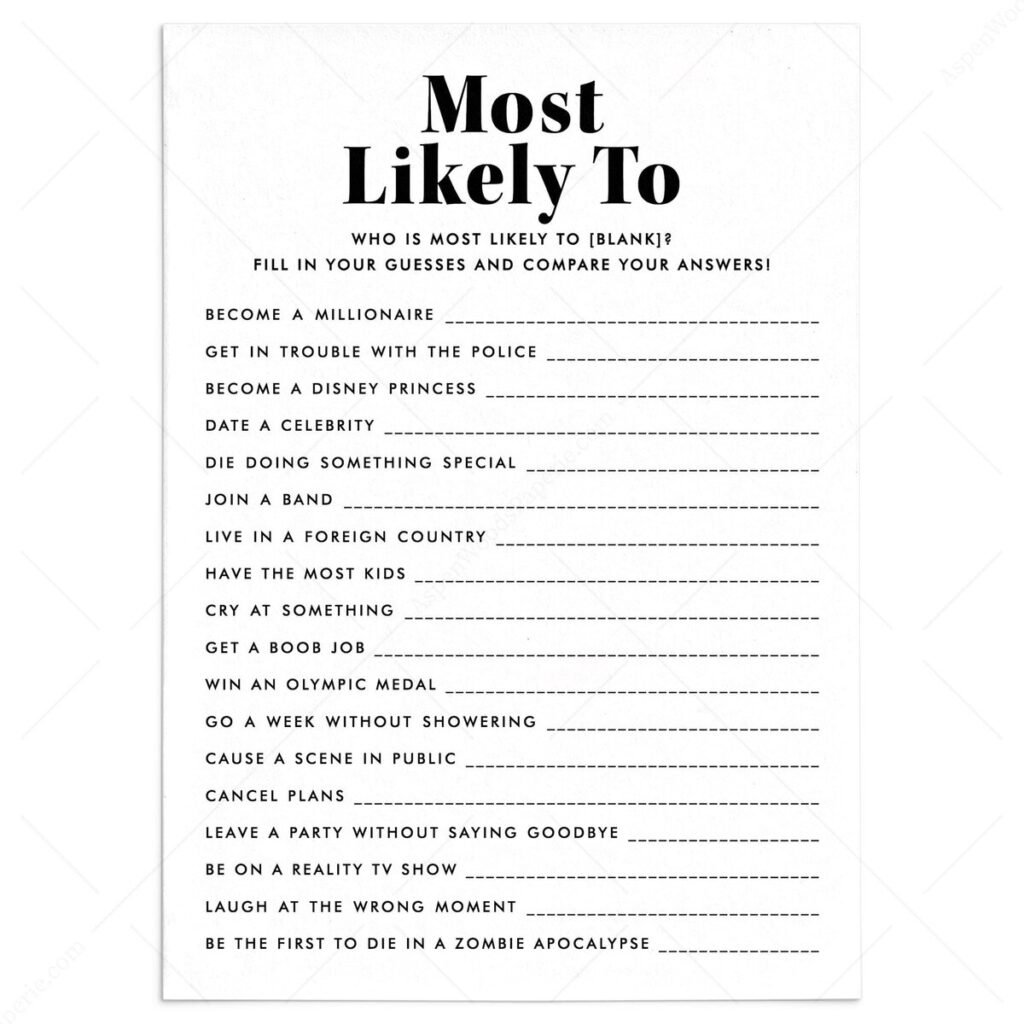
Here’s a small selection of fun “who’s most likely to questions” you can use:
- Who’s most likely to cry at a sad movie?
- Who’s most likely to forget their own birthday?
- Who’s most likely to eat dessert before dinner?
- Who’s most likely to survive a zombie apocalypse?
- Who’s most likely to travel the world alone?
Adding 50+ similar questions in a categorized list—funny, thoughtful, and work-related—can make the article a go-to resource for readers. You can also encourage players to mix personal stories or inside jokes, making each session unique and memorable.
Conclusion
“Who’s most likely to questions” are more than just a party game—they’re a versatile tool to entertain, connect, and understand people in a fun, lighthearted way. From casual hangouts to virtual meetings, these questions foster laughter, reveal personalities, and strengthen relationships. By selecting the right questions, keeping gameplay inclusive, and encouraging creativity, anyone can turn a simple game into an unforgettable experience.
Frequently Asked Questions
What are some easy “Who’s Most Likely To” questions for beginners?
Questions like “Who’s most likely to spill coffee?” or “Who’s most likely to sing in the shower?” are great starters.
Can “Who’s Most Likely To” questions be used in professional settings?
Yes, focusing on workplace traits like leadership, calmness under pressure, or teamwork makes it suitable.
How do you make sure the questions don’t hurt someone’s feelings?
Avoid sensitive topics and target playful or positive behaviors instead of personal weaknesses.
Are there online apps for “Who’s Most Likely To” games?
Yes, platforms like Kahoot, Houseparty, and other interactive polling apps can facilitate the game virtually.
How can I create my own unique “Who’s Most Likely To” questions?
Think about traits, habits, or funny scenarios relevant to your group and make questions personal or humorous.
What age groups are suitable for these questions?
The game is adaptable for kids, teens, adults, and seniors—questions just need to be age-appropriate.
Can this game help improve team dynamics?
Absolutely. It encourages interaction, laughter, and insight into colleagues’ strengths and personalities.
arlso Read dove cameron and thomas doherty