

Storm Amy has emerged as one of the most significant weather events of the 2025–26 season, affecting large parts of the UK and Europe. Characterised by intense rainfall, strong winds, and widespread disruption, the storm has prompted amber and yellow weather warnings in multiple regions. Authorities have urged residents to stay informed, limit non-essential travel, and take precautions against flooding and wind damage. The storm has captured public attention for its severity and rapid impact on daily life.
Meteorologists describe Storm Amy as a powerful extratropical cyclone, forming over the North Atlantic and intensifying as it approached Northern Europe. Unlike typical autumn storms, it combined heavy rainfall with hurricane-level gusts, creating a dangerous mix for residents and commuters. Storm Amy serves as a reminder of the growing unpredictability of weather patterns, making early warnings and proactive measures essential to minimise risk and protect communities.
What is Storm Amy
Storm Amy is defined as a severe extratropical storm that brought disruptive weather conditions to the UK and parts of Europe. The storm has caused travel delays, property damage, and significant environmental impact. Authorities and meteorological agencies, including the Met Office, have closely monitored the storm, issuing alerts and guidance to ensure public safety. Its intensity and rapid movement have made Storm Amy a noteworthy event in the 2025–26 weather season.
The formation of Storm Amy was influenced by interactions between low-pressure systems and strong jet streams over Europe. Experts have noted that these conditions intensified rainfall and wind speeds, particularly in Northern Ireland, Scotland, and Northern England. Understanding the meteorological factors behind Storm Amy helps highlight the importance of preparedness, as similar storms are expected to increase in frequency due to changing climate conditions and shifting atmospheric patterns.
Areas Most Affected in the UK and Europe
Storm Amy has impacted several regions with varying degrees of severity. Northern Ireland, Scotland, and northern England faced the brunt of heavy rainfall and strong winds, resulting in fallen trees, flooded roads, and disrupted transport networks. Amber and yellow alerts were issued in advance to warn residents and local authorities about the potential dangers, allowing emergency services to prepare for immediate response.
Beyond the UK, Storm Amy also affected parts of France, Norway, and Spain. Strong gusts and torrential rain caused infrastructure damage, flight cancellations, and, tragically, some fatalities. The storm highlighted the interconnected nature of European weather systems, showing how a single powerful storm can impact multiple countries simultaneously. Residents were advised to monitor official updates and exercise caution while travelling or remaining outdoors.
UK Weather Warnings and Precautions
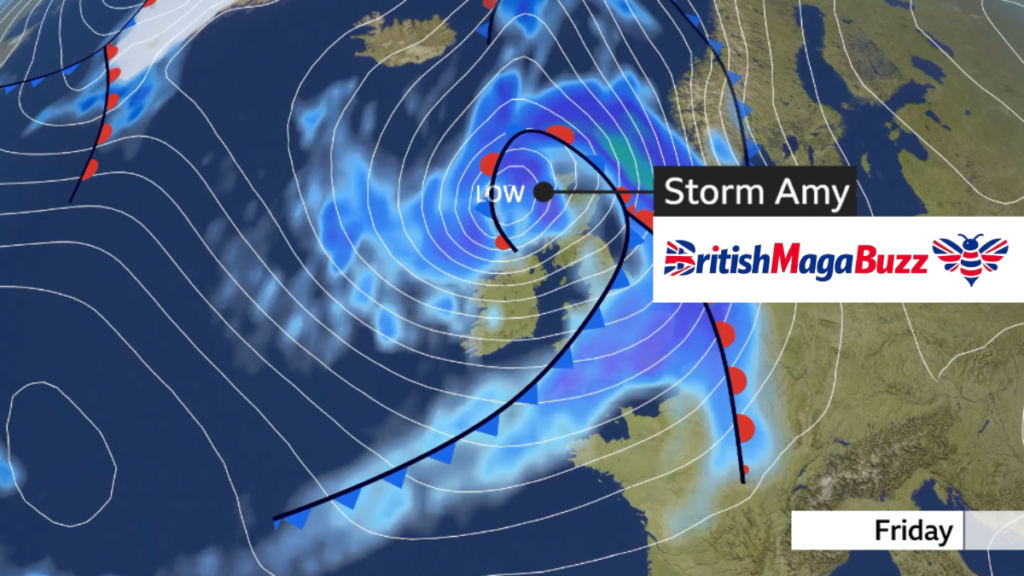
The Met Office issued amber warnings for areas expected to experience the most severe impact from Storm Amy. Residents were advised to secure outdoor items, avoid unnecessary travel, and prepare emergency kits in case of power outages. Schools and local authorities implemented safety measures, including temporary closures and alerts for parents and students, to prevent accidents and ensure public safety during the storm.
Storm Amy’s unpredictable wind patterns and heavy rainfall meant that even areas outside the highest risk zones needed vigilance. Precautionary measures such as checking live weather updates, avoiding flooded areas, and remaining indoors when possible were strongly recommended. The storm highlighted the need for community awareness and proactive planning to reduce the risks associated with severe weather events.
Travel Disruption Caused by Storm Amy
Travel disruption during Storm Amy was widespread, affecting flights, trains, and road networks across the UK. Airports in Ireland and Northern England reported cancellations due to high winds, while rail services experienced delays caused by fallen trees and debris on tracks. Commuters and travellers were advised to check transport updates regularly and plan alternative routes to ensure safe journeys during the storm.
Ferry services and local bus routes were also affected, adding to the broader disruption caused by Storm Amy. Public transport operators provided guidance on expected delays and advised passengers to allow extra travel time. These measures were essential in preventing accidents and ensuring emergency services could operate efficiently during peak storm conditions, reducing overall risk to the public.
Flood Risk and Environmental Impact
Heavy rainfall from Storm Amy led to significant flood risks, particularly in low-lying and riverside areas of the UK. Many communities experienced temporary road closures and property damage as water levels rose. Environmental agencies actively monitored river systems and provided timely warnings to ensure residents were aware of potential hazards and could take preventative measures.
The storm’s environmental impact extended beyond immediate flooding. High winds caused erosion in coastal areas and damaged local ecosystems, while fallen trees and debris created additional challenges for emergency response teams. Storm Amy underscores the importance of both immediate safety measures and long-term planning to manage the effects of increasingly severe weather events in the UK.
Power Outages and Emergency Response
Storm Amy caused extensive power outages, affecting tens of thousands of homes across the UK. Utility companies worked tirelessly to restore electricity while ensuring safety for repair crews. Residents were encouraged to use generators safely and report any outages promptly. Emergency services coordinated closely with local authorities to respond to accidents, property damage, and flood-related incidents during the storm.
The response to Storm Amy highlighted the importance of preparedness and community awareness. Residents relied heavily on official updates from the Met Office and local councils to stay safe. Social media and emergency hotlines provided essential information on power restoration, travel disruptions, and flood warnings, demonstrating the crucial role of timely communication during extreme weather events.
How to Stay Updated on Storm Amy
Keeping informed during Storm Amy is essential for safety and planning. Trusted sources such as the Met Office, local news outlets, and official social media channels provided continuous updates on rainfall, wind speeds, and flood risks. Residents were advised to monitor these sources closely to make timely decisions about travel, home safety, and personal protection during the storm.
Mobile apps and emergency alert systems also proved useful in delivering instant notifications to affected communities. Storm Amy has served as a reminder of the value of proactive planning and situational awareness. Staying connected to reliable information sources allowed residents to navigate the storm safely while reducing potential risks to life, property, and infrastructure.
Conclusion
Storm Amy has been a powerful reminder of the impact extreme weather can have on the UK and Europe. From travel disruption and flooding to power outages and environmental damage, the storm highlighted the importance of preparedness, awareness, and adherence to official guidance. Residents are encouraged to continue following updates, take necessary precautions, and remain vigilant as similar storms may occur in the future. Storm Amy underscores the critical need for communities to adapt to increasingly unpredictable weather patterns.
Frequently Asked Questions
Where is Storm Amy hitting the hardest in the UK?
Storm Amy hit Northern Ireland, Scotland, and parts of northern England the hardest.
When did Storm Amy reach the UK and Europe?
Storm Amy reached the UK and parts of Europe in early October 2025.
How strong were the winds and rainfall from Storm Amy?
Winds reached up to 90 mph in some areas, with heavy rainfall causing widespread flooding.
Which areas faced school closures due to Storm Amy?
Schools in Northern Ireland and parts of Scotland closed as a precaution during Storm Amy.
How can residents prepare for floods caused by Storm Amy?
Residents should secure property, avoid flood-prone areas, and follow official warnings.
What was the total number of power outages caused by Storm Amy?
Over 90,000 homes in the UK lost electricity due to Storm Amy’s strong winds.
Are there ongoing travel disruptions due to the storm?
Yes, flights, trains, and road transport faced delays and cancellations during and after Storm Amy.
How does Storm Amy compare to previous UK storms?
Storm Amy was faster-moving and more intense in rainfall and wind than many recent autumn storms.
What official sources provide live updates on Storm Amy?
Live updates were provided by the Met Office, local councils, and official social media channels.
Will there be follow-up storms after Storm Amy in the 2025–26 season?
Meteorologists predict more storms may follow as part of the 2025–26 UK storm season.
Also Read: britishmagabuzz