
Most Likely To Questions have become one of the most entertaining and engaging social games in recent years. Whether at a birthday party, a classroom gathering, a family dinner, or even a virtual hangout, this simple yet powerful question-based game has a unique ability to bring people closer. The concept is straightforward: participants answer fun, thoughtful, or hilarious “most likely to” prompts by choosing the person who best fits the description. Despite its simplicity, the game often sparks laughter, surprises, and meaningful conversations.
The popularity of Most Likely To Questions has grown rapidly due to social media trends, party culture, and the need for easy icebreaker activities. Unlike complicated board games or structured activities, this game requires no equipment, no preparation, and no cost. All you need is a group of people and a willingness to participate. It works for friends, couples, coworkers, and even students, making it one of the most versatile social games available today.
In this complete guide, you’ll explore everything you need to know about Most Likely To Questions — from how the game works to different categories, hosting tips, and creative variations. Whether you’re planning a party or simply looking for a fun activity to break the ice, this article will help you master the game.
What Are Most Likely To Questions?
Most Likely To Questions are playful prompts that ask participants to identify who in the group is most likely to do something specific. The format typically begins with a phrase like, “Who is most likely to…” followed by a humorous, realistic, or imaginative scenario. For example, “Who is most likely to become a millionaire?” or “Who is most likely to forget their own birthday?” Participants then vote by pointing, raising hands, or writing down names.
The purpose of Most Likely To Questions is not just entertainment but also connection. The game encourages participants to observe each other’s personalities, habits, and quirks. It highlights strengths, exposes funny traits, and sometimes even reveals surprising perceptions within a group. The beauty of the game lies in its ability to combine humor with genuine insight.
The rules are flexible, making it adaptable to different settings. In a casual friend group, everyone might simply point at someone simultaneously. In a classroom, the teacher may moderate and ensure fairness. Couples can play privately to explore each other’s perspectives in a lighthearted way. There is no strict scoring system unless players want to add one for competitive fun.
Its growing popularity is largely due to its adaptability and instant engagement. In an era where people often struggle to connect face-to-face, Most Likely To Questions provide a structured yet relaxed way to spark interaction. The game works equally well offline and online, which makes it perfect for virtual gatherings too.
Categories of Most Likely To Questions
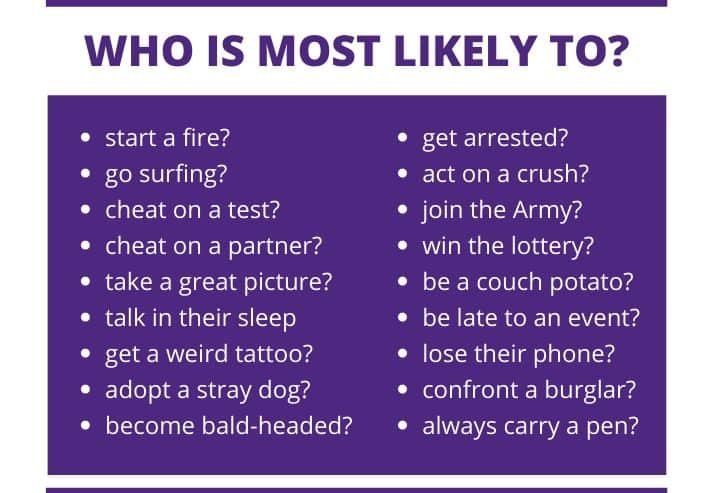
One of the biggest strengths of Most Likely To Questions is its versatility. The game can be customized depending on the group and setting. Different categories allow hosts to tailor the experience to fit the mood and audience.
Funny Most Likely To Questions are perhaps the most popular category. These include silly and exaggerated scenarios like, “Who is most likely to laugh at the wrong moment?” or “Who is most likely to survive a zombie apocalypse?” These types of questions keep the atmosphere light and encourage uncontrollable laughter. They are ideal for parties and informal gatherings.
For friends, the questions often focus on personality traits and shared memories. Prompts like, “Who is most likely to cancel plans at the last minute?” or “Who is most likely to travel the world?” allow friends to reflect on their relationships. These questions strengthen bonds by celebrating each person’s unique traits.
Couples can use Most Likely To Questions to explore relationship dynamics. Romantic prompts such as, “Who is most likely to plan a surprise date?” or “Who is most likely to apologize first after an argument?” open the door to meaningful yet playful discussions. This variation adds depth to the relationship while maintaining a fun atmosphere.
In work or school settings, questions must remain professional and respectful. Examples include, “Who is most likely to become a team leader?” or “Who is most likely to invent something revolutionary?” These prompts encourage team bonding without crossing personal boundaries.
Finally, deep or thought-provoking Most Likely To Questions focus on ambitions, dreams, and life goals. Questions like, “Who is most likely to change the world?” inspire meaningful reflection and discussion.
How to Create Your Own Most Likely To Questions
Creating your own Most Likely To Questions can make the game even more engaging and personalized. The first step is understanding your audience. Consider the age group, cultural background, and the relationship between participants. Questions suitable for teenagers may not work well for coworkers, and romantic prompts may not suit a classroom environment.
Balancing humor and sensitivity is essential. While the game thrives on playful teasing, it should never cross into uncomfortable or offensive territory. Avoid sensitive topics such as finances, personal trauma, or deeply private matters unless the group is very comfortable. The goal is laughter and bonding, not embarrassment.
To make your Most Likely To Questions more engaging, try incorporating themes. For example, during holidays, you can ask, “Who is most likely to eat all the holiday desserts?” At a graduation party, you might ask, “Who is most likely to become famous?” Themed questions make the experience feel tailored and memorable.
You can also draw inspiration from current trends, movies, or pop culture references. However, ensure that everyone in the group understands the reference to avoid confusion. Customization adds creativity and makes the game feel fresh every time it’s played.
Tips for Hosting a Successful Most Likely To Game
Hosting a successful Most Likely To Questions game requires thoughtful preparation, even though the game itself is simple. Start by creating a comfortable and welcoming atmosphere. The ideal group size is usually between 4 and 10 people, which allows everyone to participate actively without feeling overwhelmed.
Encourage participation by starting with light and easy questions. This helps shy participants feel comfortable before moving on to more creative or deeper prompts. As a host, you should also ensure that no single person becomes the repeated target of jokes, as this can make them uncomfortable.
Consider variations of the game to keep it exciting. For example, in virtual settings, participants can type names in a chat box simultaneously. Adults may choose to turn it into a light drinking game, while competitive groups can assign points for each vote received.
The key to success lies in maintaining positivity. If disagreements arise, treat them playfully rather than seriously. Remember, Most Likely To Questions are meant to create laughter and connection, not conflict.
Benefits of Playing Most Likely To Questions
Playing Most Likely To Questions offers more than entertainment. It strengthens friendships by encouraging participants to appreciate each other’s qualities. When someone is chosen for a positive trait, it boosts confidence and reinforces social bonds.
The game also improves communication skills. Participants learn how others perceive them, which can lead to self-reflection and growth. In team environments, this fosters understanding and collaboration.
Additionally, laughter has proven psychological benefits. Engaging in fun activities reduces stress, increases happiness, and creates lasting memories. Most Likely To Questions provide a simple yet effective way to bring joy into social gatherings.
Common Mistakes to Avoid
Despite its simplicity, there are common mistakes to avoid when playing Most Likely To Questions. Asking overly personal or sensitive questions can make participants uncomfortable. Always consider the comfort level of the group before introducing deeper prompts.
Another mistake is targeting one person repeatedly. This can make the game feel unfair and discouraging. Spread the focus evenly to ensure everyone enjoys the experience.
Failing to set boundaries is also problematic. Make it clear that anyone can skip a question if they feel uncomfortable. Respect is essential for maintaining a positive environment.
Lastly, avoid turning the game competitive in a negative way. While adding points can increase excitement, remember that the primary purpose of Most Likely To Questions is connection and fun.
Conclusion
Most Likely To Questions remain one of the most versatile and enjoyable social games available today. From funny party prompts to deep, thought-provoking discussions, this game adapts effortlessly to any setting. Its simplicity is its greatest strength — no equipment, no cost, just genuine interaction.
By understanding your audience, crafting thoughtful questions, and maintaining a respectful atmosphere, you can transform a simple activity into an unforgettable bonding experience. Whether you’re playing with friends, family, coworkers, or a partner, Most Likely To Questions offer laughter, insight, and meaningful connection in every round.
Frequently Asked Questions
What are Most Likely To Questions?
Most Likely To Questions are fun, interactive prompts where participants choose the person in a group who is most likely to do a specific action or fit a certain scenario. The game is commonly played at parties, classrooms, team-building events, and social gatherings.
How do you play Most Likely To Questions?
To play, one person reads a “most likely to” question aloud, such as “Who is most likely to become famous?” Everyone then votes by pointing, raising hands, or writing down a name. The person with the most votes is considered the answer for that round.
How many people are needed to play?
Most Likely To Questions can be played with as few as two people, but it works best in groups of 4 to 10 participants. Larger groups make the game more dynamic and entertaining.
Are Most Likely To Questions suitable for kids?
Yes, the game can be adapted for children by using age-appropriate and positive questions. For example, “Who is most likely to become a superhero?” or “Who is most likely to invent something amazing?”
Can Most Likely To Questions be played online?
Absolutely. The game works very well on video calls. Participants can type their answers in the chat at the same time or use reaction features to vote.
What are some good categories for Most Likely To Questions?
Popular categories include:
- Funny and silly questions
- Friends and friendship-based prompts
- Couples and relationship questions
- Work or school-related questions
- Deep and thought-provoking scenarios
How long should the game last?
The game can last anywhere from 15 minutes to over an hour, depending on the number of questions and participants. It’s flexible and can be adjusted to fit your event.
How do you avoid making someone uncomfortable?
Avoid sensitive or overly personal topics, set clear boundaries at the start, and allow participants to skip any question they’re not comfortable answering.
Can Most Likely To Questions be competitive?
Yes, you can add a scoring system where participants earn points for each vote they receive. However, the main goal should always remain fun and connection.
Why are Most Likely To Questions so popular?
They are simple, require no equipment, encourage laughter, and help people connect quickly. Their versatility makes them suitable for almost any social situation.